
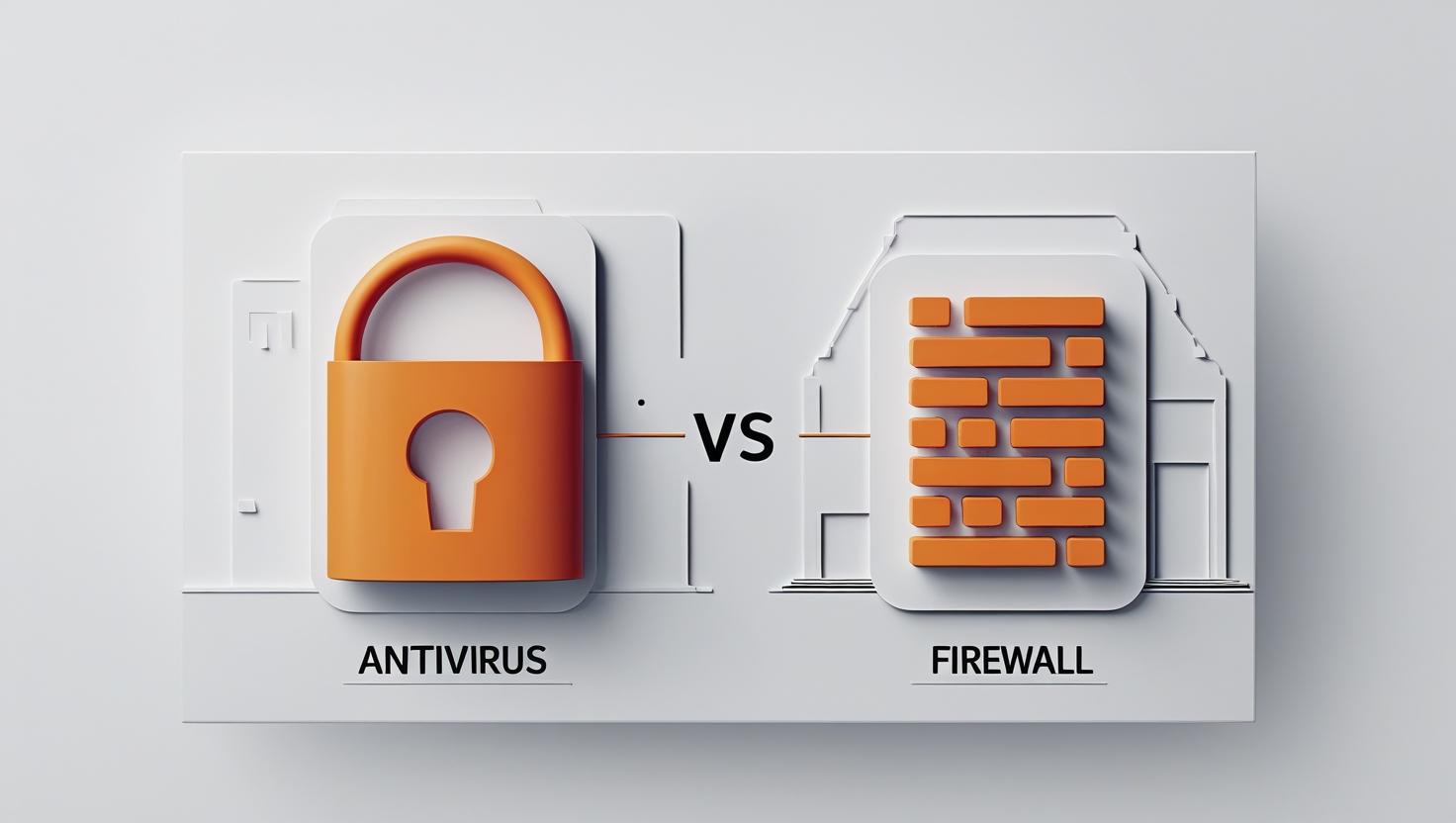
Antivirus and firewall tools are both designed to protect your devices, but they don’t do the same job. A lot of people confuse the two or think one can replace the other. Understanding the difference helps you build better protection for your system.
Antivirus scans files and software for known threats. It checks for viruses, malware, ransomware, spyware—anything that can infect or damage your device. Most antivirus programs also include real-time protection, which means they scan files as you open or download them.
Firewalls, on the other hand, act as gatekeepers. They monitor traffic that goes in and out of your device. If something tries to access your network in a suspicious way, the firewall can block it. Firewalls can be software-based (installed on your device) or hardware-based (built into routers or modems).
Think of it this way:
-
Antivirus = filters what’s inside your device
-
Firewall = filters what goes in and out
Most operating systems come with a basic firewall. Windows, for example, has one built-in and enabled by default. But this doesn’t replace antivirus. You still need both tools to cover different types of risks.
The ideal setup? Use a strong antivirus for internal threats, and keep your firewall active to watch your network. For better protection, pair these with safe browsing habits and regular software updates.
Want to know if your antivirus alone is enough? Check out the signs your PC might be infected.