
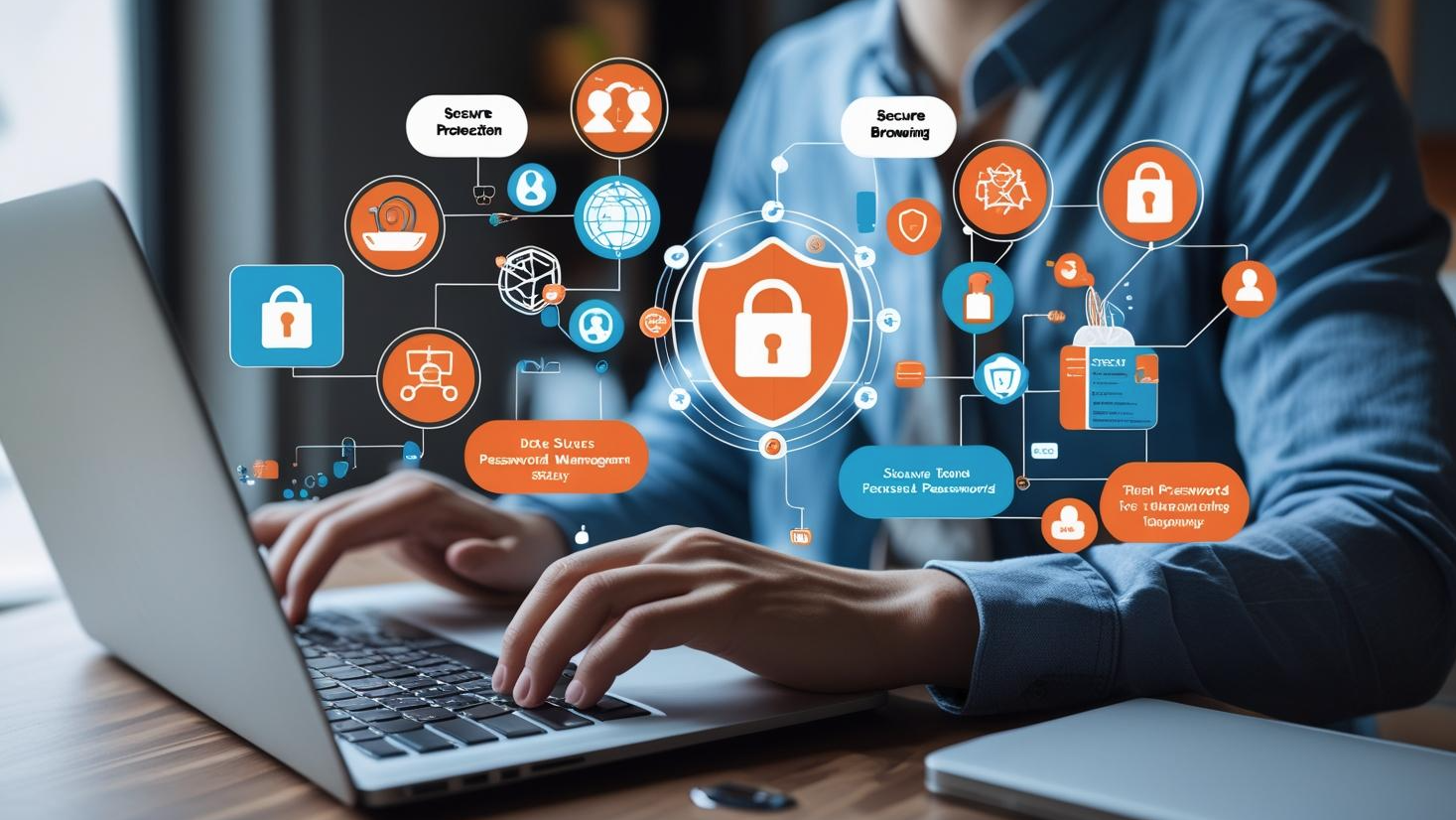
You don’t need to be a tech expert to protect your personal data. What makes the biggest difference is what you do every day online. These habits are simple, but they work.
-
Use strong, unique passwords
Never reuse the same password across accounts. A password manager helps you keep things safe and organized. -
Turn on two-factor authentication
It adds a second layer of security. Even if someone gets your password, they won’t get in without the second code. -
Be careful what you click
Avoid suspicious links in emails, texts, or ads. If something feels off, don’t open it. -
Keep your software updated
Updates fix security holes. That includes your browser, phone, and operating system. -
Don’t overshare on social media
Posting your birthday, job, or location helps scammers build a profile on you. -
Use encrypted apps for messaging
Apps like Signal or WhatsApp (with end-to-end encryption) protect your conversations. -
Review app permissions regularly
Some apps ask for more access than they need. Check what they can do—and remove what’s unnecessary.
These steps don’t take long, but over time they add up to stronger protection. You’ll have fewer risks and more control over your digital footprint.
Curious how hackers try to trick you? Learn how phishing scams are evolving and how to avoid them.